
“Funding strategies and resources for legacy resorts” was the topic of a recent Timeshare Board Members Association Conversations Series Webinar.
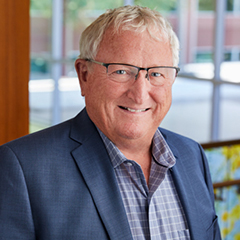
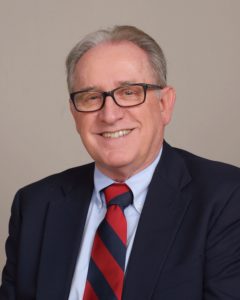

Pictured above from left to right are webinar panelists: Craig Huntington, president emeritus of Alliance Association Bank; Gary Porter, president of Facilities Advisors International; and Jeff Brock, regional director of Grand Pacific Resorts, who joined TBMA president Shep Altshuler for this discussion. Following are edited highlights:
Lessons learned in 2020
Porter: As resorts suddenly questioned what their cash flow would look like with the huge disruption in services caused by the pandemic, one thing that kicked back for all of us was to realize that if an association had been paying attention to its reserve plan, if it had been funding adequately and had plenty of money, it was able to weather the storm relatively well.
We also learned that because of the disruption in operating cash flows, one of the biggest questions we kept getting is, can we borrow money from reserves to help out on the operating side?
Yes, there’s a series of steps to make sure that you can do it legally, in accordance with civil code and your governing documents. If in fact you have enough money in reserves, you can pull money out of reserves without shortchanging the future in any significant way.
As things shut down all of a sudden, we started to see additional costs, on both the operating and reserve sides, as reserves had to accommodate the stay-at-home orders, the social-distancing protocols, et cetera, and to keep their guests and members safe, which is their highest priority.
A lot of things changed, but the fact is, we still don’t know what the future may hold for us.
Altshuler: One of the lessons learned is that we’re continually learning lessons. So, Jeff, talk about what you see from your property-management perspective.
Brock: In February and March of 2020, things happened quickly and there were many unknowns. We realized that we would have a loss of revenues from things like rental, food-and-beverage operations, and other types of fees. We very quickly offset expenses by reducing services and furloughing a number of our associates. Because of those offsets, most of our properties actually had some surpluses by the end of 2020.
When we looked at reserves, we didn’t know how long this was going to go on, what was going to happen, but we’ve been working for several years to get our reserves in line and very healthy. For resorts that had very low occupancy or were closed, we saw 2020 as an opportunity to do some projects that were more intrusive to the guests, such as resurfacing a pool deck. Then, when things began to re-open, we found that we had very strong demand by owners and renters who wanted to come and vacation.
Another thing we learned about funding is that timeshare is unique. Unlike hotels, many of which closed and still have not re-opened or have opened to minimal occupancy, our ownership status kept us very full during those periods and the maintenance fees that owners pay have continued to come in.
We were fearful about delinquency, but many of our resorts actually beat their delinquency budgets in 2020. That shows the resilience of timeshare, and what a great vehicle it’s been for withstanding the storm.
Priorities for 2021
Brock: Every resort has to look at its unique cash-flow position as we go forward through 2021. There’s a lot of optimism right now with the vaccine rollout. Hopefully we’re through the worst and things will continue to get better, but we don’t know.
You have to maintain a priority of reserve spending even in the worst of times, such as life-safety issues. Other types of reserve spending—infrastructure projects—become exponentially more expensive to defer now and do in the future. If you don’t have the cash flow to continue on with your established reserve plan, make some adjustments and try to preserve some capital going into the future.
Altshuler: Gary, where are you setting your priorities in your collaboration with property-management companies?
Porter: We’re totally in sync with Jeff on this, in that when we go on-site and look at properties, we’ve got our people trained to look first at the health and safety issues, and the continual-use systems—plumbing and electricity. Make sure those things are all covered or considered. Next you move to infrastructure, and then the furnishings, fixtures, and equipment inside the units.
Altshuler: Craig, talk from the banking side about funding lessons and association priorities in 2021 and beyond.
Huntington: If you want to do some improvements and you need a loan, it’s important that you continue to collect the assessments, because that’s what the bank really focuses on. If a lot of owners are not paying, look at other ways to sell those units or do something to make sure you collect those assessments. I cannot stress that enough.
Board and property-management collaboration
Huntington: The property managers must work with the banks to show that they’re collecting their assessments and have a reserve study. We almost always require a reserve study for anybody asking for a large loan. Always be upfront at the bank. Know where your struggles are and then we can usually help.
Altshuler: From the reserve-study side, what are the benefits of good collaboration between all these players?
Porter: There are two types of reserve studies—two levels of service. What most people engage a reserve study company for is an independent reserve study. A reserve professional comes on-site, performs an analysis, and delivers a report that says, “Here in my expert opinion is what you should do.”
That effectively is like a mini-version of a long-term maintenance plan with a funding schedule attached. Such studies sit on the shelf for three to five years. They can set you on the right course, but what we look at is more of a long-term collaboration. We view the reserve study as a process, not as a one-and-done.
We developed what we call the Reserve Management Plan, wherein we go on-site and interact with the on-site management and maintenance staff to learn what should be done and what they plan to do. We work with them and try gain as much knowledge as we can, and put that together with our own skills, knowledge, and experience to create a financial plan.
The reserve study is not a maintenance plan. It is a budget, so we look at that collaboration to make sure that the reserve study fits in with the resort’s maintenance plan and budget so they are in sync moving forward. We try to match it to their five-year plan—if they have one—because as things fall into that five-year window and become near-term rather than long-term, gauging when you’re going to do it and how much it’s going to cost become easier.
Altshuler: So collaboration is ongoing. Talk about that from the property-management side.
Brock: About four years ago, we decided to engage Gary’s company for our reserve studies, and it has been an ongoing collaborative process for all of our properties. In the beginning, there were a lot of interviews, a lot of information gained from the maintenance teams and the on-property engineering teams, as well as that initial physical inspection.
After that, our general managers became very engaged in the planning process and in working with Gary to keep the reserve study updated. As Gary said, it’s a budget, a financial-planning tool for us to look at, not just for the year in front of us, but for five or 10 years into the future.
Things happen. Sudden, one-time expenses happen. Things break. Instead of waiting three to five years to update that in the study, our GMs can update those right now. I also think it’s great from the collaboration standpoint. A lot of times, when you look at some of these larger projects, like renovation, you may consider doing it at one time or in phases. If we do it in three years or five years, or in one year, how does that affect cash flow? We can look at those different scenarios to help us plan. We may even find that we don’t have enough financing and we may need to consider getting a loan at some point in the process.
Deferred maintenance
Altshuler: Jeff, what is your definition of deferred maintenance?
Brock: Deferred maintenance is trying to keep your expenses low in the short term. When resorts have come to us looking for help, they have kept their maintenance fees low and failed to continue contributing to the reserve fund, and items that should have been maintained during that time have been left to decay. When you do that, fixing them becomes exponentially more expensive, so it’s really a short-term vision to save cash that costs more in the long term.
Porter: I concur. You should never put off a project, because it will cost you a lot more when you postpone it. From the reserve-study standpoint, it becomes a matter of cash flow. When does the maintenance get performed, and when does the cash go out the door?
Sometimes, you’re not performing any maintenance at all. You’re not even aware of a maintenance issue. Pay attention to the maintenance.
Monitoring cash flow
Altshuler: Jeff, what exactly is cash-flow analysis, and how does it come into play here, so resorts really track their income and expenses?
Brock: It’s critical. If you look at your reserve study and see a major future expenditure coming up maybe three or four years out, you look at your expected cash flows for the reserves. That’s primarily the maintenance-fee portion that goes into reserves. You look at the other expenditures that you have planned, and find out whether you’ll have the capital when you get to that major expenditure.
Then you have to figure out what to do if you don’t have enough capital. Possibilities include increasing your reserve contribution, safely deferring that project for another year or so, maybe a special assessment (not that anybody wants to do them), or a new loan. Otherwise, if you haven’t planned for that major expenditure, you have a really large problem when it comes up.
Altshuler: Should associations look at their cash flow on a monthly basis to gauge and continually update it through the end of the year?
Brock: Gary mentioned that five-year plan. At Grand Pacific, our accounting department does a five-year cash-flow plan that is updated monthly. Our accounting department also has access to the reserve study, so if we’ve added or removed an expenditure, that five-year cash-flow plan would change to match.
Altshuler: Craig, if a resort needs to borrow money for working capital, does financial analysis, cash-flow analysis, play into the evaluation of your ability to lend money?
Huntington: Absolutely. We want to see where the money’s been coming from, and how it’s going to last in the future. But I want to make a more important statement here: If the association is following and funding the reserve study and watching its cash flow, it will never have to come to me. If you have to get a loan, you did something wrong. You weren’t paying attention to your cash flow and making sure your reserve study was up to date.
Porter: Craig is correct, but some of the “new” resorts we start working with are actually 20 or 30 or 40 years old, and some are conversion projects. They’ve got built-in problems and underfunding going back for decades that simply can’t be undone and overlooked. They’ll have to visit Craig before they can create a proper long-term plan looking forward.
Brock: We’ve had resorts come to us to manage that were exactly in that situation. You can pull them back in the right direction with increases in revenue, monetizing non-performing inventory, working on the collections side, getting your delinquency down, resale programs, et cetera. Just like anything else, it takes time and planning to get a funding mechanism in place that works going forward.
Funding, assessments, and budgets
Altshuler: So now, we need money to operate. We have some money in reserves, but we may need to do other things. We’re in the middle of an ongoing pandemic. Craig, what are the best funding sources in 2021 from your perspective?
Huntington: All the banks have been walking softly over the last year. Luckily, the pandemic hit after most of the assessments were paid in January 2020. Some pay throughout the year, but the majority pay in January. From what Jeff said, it seems to be going pretty well, which we’re thrilled to see. If they can keep the funding up, then we’re still in the business to make loans.
But, as I said, it’s all about collecting the assessments. If they’re not coming in, no bank can make a long-term loan to an association. A bank will never make a loan to somebody for operating expenses.
Porter: My personal mantra to associations over the years is you’ve got to have an adequate budget. If operations are not being funded adequately, we don’t even talk about reserves. Operations come first, and reserves come second. You’ve got to pay attention to that.
For more information, visit:
Alliance Association Bank, allianceassociationbank.com
Facilities Advisors International, reservestudyusa.com
Grand Pacific Resorts, grandpacificresorts.com
TBMA: Email staff@tbmassoc.org; visit tbmassoc.org