


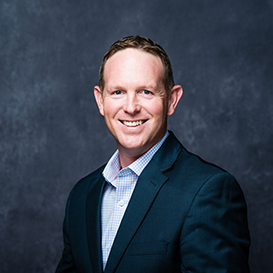
A recent Timeshare Board Members Association Conversations Series webinar featured a discussion of legal and insurance issues. The panelists, Attorney Joel McTague of the Frank Weinberg & Black law firm, and insurance executives Scott McGinness and Terry Ford of Gregory & Appel (pictured above from left), joined Shep Altshuler, TBMA president, to explore legal and insurance issues. Following are edited highlights:
McTague: I’m a partner at Frank Weinberg & Black and head of the firm’s Community Association Compliance Practice Group. I’m Board Certified by the Florida Bar as an expert in condominium and planned unit development law. As a firm, we concentrate heavily in the Community Association field, which includes condos, homeowner associations, and timeshares.
We recognize that you’re running a business, not just a timeshare. It’s a full enterprise with employees with a whole host of issues—employment, construction, litigation, tax, almost all areas. We aren’t full service, though, because we don’t do personal injury or credit.
McGinness: Gregory & Appel is a 137-year-old Independent insurance agency located in Indianapolis. We’ve been working with timeshares for quite a long time. We insured RCI many years ago and for a lot of years. That really got us ingrained in the timeshare business, and we’ve spread out since then. We now work with exchange companies, management companies, and individual owners’ associations all over the United States, and some in Mexico as well. It’s an industry that we really enjoy, and we like giving back to the industry by participating in webinars and seminars like this, and assisting in educating its members wherever we can.
We look back at a whole year of significant changes and impact. Two main things have affected insurance in just about every industry, including timeshare, in 2020. One, obviously, is the COVID-19 pandemic. The other is a hard market. Insurance is cyclical. We’re in a very difficult hard market right now that has been going on for 18 months to two years, and we expect it to continue through 2021.
Property premiums are going up drastically. We’re also seeing an increase in general liability and umbrella premiums. On the property side, the increases are due mainly to loss experience. We’ve had a lot of natural disasters over the last couple of years—hurricanes and wildfires—and after the recent flooding in Texas, freezing and water damage claims. This has taken its toll on the industry, and pricing is going up accordingly.
Then on the general liability and umbrella side, we’re seeing a lot of claim activity, and an unusually dramatic increase in umbrella pricing. I imagine that most owners’ associations have seen this already in their most recent renewal.
On the property side, if you’re in a coastal area or a high-hazard area with exposure to earthquakes, you’ll probably see a 20 percent to 30 percent increase in premiums, and you may have experienced that same kind of increase at the last renewal. On the general liability and property side, you can expect to see a five percent to 10 percent increase.
Ford: Our last hard market was right around September 11th of 2001, so we’re talking many, many years ago. Typically, a hard market is short-lived. So even though we’re in year two, with projections of 2021 being much of the same, expect to see some relaxation in premium increases as the year goes on.
Carriers don’t like the fact that so many potential claimants are involved in a timeshare Directors & Officers claim, so they have either exited the marketplace altogether or not renewed if your association or resort has experienced a D&O claim. They’re unforgiving in the way that they increase their pricing at renewal time. So, it becomes a difficult coverage to place if you have lots of activity or too many unit owners under the same policy.
With respect to cyber insurance, the pandemic led many people to go home and work remotely. As a result, they may have come to your resort if it was allowed to be open. Some resorts have turned their location into a work-from-home destination. We’re seeing a lot of cyber claims for ransomware just because the general public wasn’t prepared with safety protocols, so we’re seeing cyber policy premiums go up.
Altshuler: From the legal perspective, how can owners’ associations and our attendees minimize legal exposure claims in 2021 and beyond? What are the issues that associations should realize?
McTague: You can never completely eliminate the threat of illegal exposure. You’re always going to have at least eight potential exposures to frivolous claims. You should not be entirely worried about that, but to minimize legal exposure, you need to start working together as a team, with the board, management, your insurance broker, your attorney, your accountant, and your IT staff. If you have a construction engineer, a pool manager, you name it—bring them in. Everybody has a role to play in evaluating the association’s operations, to determine the current legal exposure and how best to address it.
For example, is the pool really capable of being open with the COVID-19 positivity rate in your area? Do you have a construction issue that may contribute to slips and falls?
With everybody working from home, ask your IT staff to identify possible security breaches. Many insurance brokers, like Scott and Terry’s company, have a department that will come in and help you identify these potential risks. That’s a great resource to have, that a lot of people don’t take advantage of.
A lot of the regular casualty claims have dropped, because some clients ceased operations, but there are other kinds of claims you wouldn’t normally expect. It’s not necessarily an increase or a decrease. It’s a shifting of the type of claims that we’re seeing.
We’ve been preaching about cyber insurance for several years now. Some good insurance products are out there, especially made for community associations. It’s not very expensive. I highly recommend you look into it, because right now, it’s needed more than ever. Because of the increase in claims, expect to see some increase in the pricing on some of these cyber products, but they’re still very affordable. You may also see some increase in the requirements that they impose upon you.
On some of our larger cyber clients, we’re seeing the carriers impose multi-factor authorization features, and more training, etc. They want to help you try to prevent those claims.
Altshuler: What is a resort’s exposure if it sets a standard that may be in conflict with a state mandate, for example, wearing a mask?
McTague: If the state says X and you follow X, you should be relatively OK. When you start going above and beyond, you are normally protected, but then you have to follow through and not merely give lip service. That’s where an association could get into trouble. Also, when you start dropping below the requirements, you possibly face legal liability.
So far, we have not seen any successful general liability claims against a resort or anyplace else, because it’s very difficult for people to prove where they were exposed to the virus. But if you let down your guard and fail to meet the guidelines, then you’re open and susceptible to a claim.
McGinnis: We tell our clients the exact same thing.
Ford: I started looking today at the numbers. I’ve only seen one claim in the United States that was successful so far, and that was in an All Risk policy, not even general liability.
McTague: It’s great to have all your professionals together, and it’s worth a little bit of extra money. You bring in your insurance professionals, attorneys, and accountants. You may even want to consider hiring an outside risk manager to identify these spots in your organization where you may potentially have insurance claims.
At one association, the risk manager went in and walked into the front desk area, which is normally the first thing people see when they walk in. And right there, on the computer screen, in full view of guests checking in, was the username and password for the website or the reservation system that anybody could now use to hack the system.
Bringing in professionals like this can identify the simple areas that your staff may not even think of.
Ford: At Gregory & Appel, we have a separate unit made up of loss-prevention experts as well as client or claims advocates. A former claims adjuster on the carrier side now serves our clients on a daily basis, if a claim were to occur.
We realize that resorts and owners’ associations come in all different sizes. We’ve got some smaller ones that operate on a tighter budget, and then we’ve got large ones with more flexibility. Our philosophy has always been, regardless of your size and scope, Gregory & Appel and our Client Services team become your risk management team, or we work alongside your risk management team.
We develop strategies so we can identify potential losses, and strategize and develop opportunities to prevent those losses from occurring. Then, in the event that a loss does occur, we want to make sure that we are able to expeditiously resolve that loss, and establish a framework that provides the least amount of impact to future premiums paid as a result of that loss. So, Scott and I have gone out of our way when working with our clients. We look at safety measures that you’ve already put in place. Maybe your resort on the coast has installed hurricane windows, but you haven’t received that credit from the insurance carrier. Our job is to go find those things that you’ve done really well at a resort, note it, and then deliver that narrative to the carrier so we’re reducing your overall cost of risk.
McGinnis: There’s no additional charge for those services. We want to be brought into it, and, and if it means physically visiting the resort, that’s really the best way for us to do it, so we can see what’s there, help identify the issues, and provide recommendations on how they can be corrected.
Also, it’s helpful for us to attend more meetings. Now, sometimes there’s a particular issue and the board would like us to be there, but other times it’s good for us to know what changes are taking place at the resort. Are you building a new pool? Are you renovating rooms? Are you installing an elevator? All of those physical changes in a resort are good for us to know so we can make sure the insurance adjusts along with it. Sometimes things happen and it may need some adjustment in the insurance coverage. If we don’t know about it, we can’t make that adjustment.
Altshuler: So, Joel, how do you work in terms of this collaboration effort? Are fees associated with it?
McTague: Every professional is slightly different. Our firm, for example, works on a straight hourly basis—but what I usually say is that spending a half-hour on the phone with me to cover a possible situation is a lot cheaper than spending the next five years in a morass of litigation. Same thing with accountants. Some charge flat fees, some charge by the hour. Most insurance brokers don’t have extra charges for attending meetings or anything like that. They are very happy with the commission. Other professionals, such as a risk manager, will probably charge either on a per-property or an hourly basis.
It really depends on your professionals, but feel free to ask how they charge and try for a pricing scheme that’s reasonable, workable with the association.
Altshuler: What are the trends in claims that resorts should be aware of?
McGinnis: We’re seeing a lot of water damage claims these days—frozen pipes or whatever. That’s going to result ultimately in higher premiums, more restrictive coverage, and maybe higher deductibles, so we recommend that you address those things where possible with water leak sensing devices.
Some states in non-coastal areas are very susceptible to wind hail claims, and they can be very expensive. We’ve had several in Missouri. That’s a tough state for wind hail, so you’re seeing higher prices. You’re also seeing much higher deductibles. There might have been a $5,000 deductible for all property claims, including wind, and now they’re imposing a separate wind hail deductible. That might be a percentage of the total value, so if you have a $5 million building, you can have a three percent deductible on that entire building. That could be devastating.
We’re also seeing quite a few Directors & Officers claims. Normally, part of the D&O policy is employment practices coverage, which is wrongful termination, sexual harassment, failure to hire or promote—all of those employer-employee things. If you have a claim like that, it can make your next renewal on your D&O policy pretty painful.
Ford: Business interruption is another scary area. So far, we haven’t seen any carriers paying business interruption claims when the resort was told that it needed to close due to the government shutting down operations during the pandemic. The policy for paying business interruption due to loss of revenue is triggered by physical damage to property, and since that didn’t happen, carriers aren’t paying those claims. Restaurants are having a little bit of success, but not resorts.
If you have claim activity, it doesn’t affect the policy or the premium for the current policy term, but the more claims that you have, the more impact that can have on the upcoming renewal. Your current carrier may elect to non-renew you because it doesn’t want to pay any more losses, or the next renewal will be extremely challenging. You’ll see the potential for increases to your expiring premium as a result of your claims history, and the hard market will make it a lot worse.
McGinnis: Some of the standard products, like General Liability and Property, are tightening their definitions and exclusions to make them as unambiguous as possible. They don’t want to pay claims on pandemics, so in every insurance policy you’re going to see different language.
Active shooters and terrorism coverage is still very much available. I’m not a big fan of the government’s Terrorism Risk Insurance Act coverage because the government has never paid a claim. They have to declare an occurrence as an act of terrorism, and they’ve never done that—not even for the Boston Marathon bombing. Also, a very high threshold of loss has to occur before that coverage is triggered.
Private-market terrorism insurance will respond much quicker, and it’s easier, and I don’t really think it’s much more expensive. So, if terrorism is a coverage that you’re interested in, I would look to the private market on that.
As to new products, we are seeing some pandemic insurance being introduced, but so far it’s not retroactive to COVID-19, and it’s going to be crazy expensive. It’s the kind of thing that only Fortune 500 companies could purchase.
Altshuler: Somebody files a claim and they sue the association, then they name the board members individually. How does that work from a legal perspective?
McTague: It really depends on the type of claim that you’re bringing because, especially in Florida, there’s a difference between suing the association and suing the board members individually. A breach of fiduciary duty claim, for example, alleges that the board of directors did something intentionally to harm the association. They knew of a potential exposure to COVID-19, and they decided to open up the association anyway. Even though one of the employees tested positive and was shaking hands with everybody at the direction of the board, that’s a claim against each individual director. However, when the board does something bad that is just misguided or a misjudgment, that’s an action against the association. Those tend not to be as successful.
Even though it’s great having D&O coverage, once you have a claim you become virtually uninsurable, so think about the severity of the claim and whether you really want to report it.
McGinnis: Most of the D&O claims we see fall into two categories. One is where the board doesn’t follow its own rules. The other category is employment practices, like a sexual harassment or discrimination claim.
Altshuler: How many of them are defensible by the insurance carrier, and how many will fall out so the board members might have to personally defend themselves?
McGinnis: If a board member is individually named, he should get individual coverage, whether it’s the insurance company appointing an attorney separate and distinct from the association, or if the board member decides to go out personally and dip into his pocket to pay for it. It will be a great idea, because there’s a potential for conflict between you as a board member with the rest of your board members, because fingers will get pointed.
Ford: The policy that the association buys on behalf of the board members could suffice in this situation. What would it cover? Any sort of defense costs associated with the claim, and potentially the settlement as well. The area that gets a little wishy-washy is in cases of intentionality, when you as the board or individual member intentionally opened your resort in the middle of a shutdown—when you knew there was a pandemic going on. If the court system were to prove that you were intentional in that act, every insurance policy has an exclusion for intentional acts, so I don’t believe that policy would pay.
If you’re competent as a board member, if you’re stupid as a board member, you should be covered. Only when you start doing things intentionally with some sort of motive of harm are you normally excluded from D&O coverage. Then you are personally liable and you’re going to reach into your own pocketbook.
Also, keep in mind that D&O insurance policies normally have two distinct areas of coverage—the duty to indemnify and the duty to provide counsel. Even though you may get a court- or insurance-appointed attorney to represent you, it may not cover any judgment against you, depending on your policy. You need to work with your insurance broker and review the policy to make sure that you’re getting the best product for what you need for the association. Be careful when you’re buying your D&O insurance, because D&O insurance is not a standard coverage. Every company’s form is different.
I have seen some add-on D&Os to a package policy, and they might charge you $200 or $300 for the D&O coverage. Expect that to be fairly worthless coverage. You need to buy a standalone D&O policy, and look at what’s covered.
Altshuler: So what actions should associations be implementing now?
McGinnis: Start early, 180 days or at least no less than 90 days from your renewal date, and involve agencies familiar with timeshare, because timeshare is unique. A lot of agents and insurance carriers aren’t up to speed on coverage and operational nuances. Especially with property insurance, make sure your values are updated. Provide the most current information possible.
If an insurance company sees that a building was built in 1980, they’re going to assume the roof was built in 1982, and everything in there is an original’s original. If that roof has been replaced, make the agent aware, because it really helps. Trying to keep our increases to a minimum this year is identifying all the positive aspects of a building—hurricane windows, roof clips, any kind of updated wind mitigation features, updated roofs, updated wiring. Give your agent the most up-to-date information, because that is huge. Also, you’ll need to provide loss information.
Then think about what areas you might be flexible on. Are you willing to look at a higher deductible for wind, or earthquake? Are there are some coverages you may not need? You can change coverage around and keep that pricing down a little bit. I mentioned earlier about water leak sensors. If you’ve had a history of water damage claims, that would be very helpful. Anything proactive that you do to eliminate claims will go a long way with the insurance carriers.
Another thing to think about is master programs, where a group has a common denominator—a group of resorts with the same management company, or maybe even the same exchange company. Grouping resorts together under a single policy gives you more pricing flexibility.
Finally, have a carrier loss-control expert come out and walk your property with you. It’s your opportunity to tell your story, to make your resort shine, show them what you’ve done and what you plan to do—your long-term outlook.
The more information they have and the more comfortable they are with your resort, the harder it is for them to ratchet up pricing because you have a built-in relationship and a personal touch.
McTague: I would also recommend that you have several months of working capital on hand because, even though you may make a claim to the insurance carrier for a hurricane event or something, you still have expenses while the insurance carrier decides whether or not to pay your claim. The insurer may take four, five, or six months to investigate. Meanwhile you may no longer have a roof after a hurricane. You need some money around to pay for the initial restoration costs, and the resort’s bills. You still have taxes, employees, and perhaps resort operations continuing in parts of the resort, but you may not have the same income as before.
McGinnis: Insurers do have the ability to stretch things out, to eliminate the burden of paying a lot of claims simultaneously, particularly in a region that’s been affected. You can help eliminate that to some extent by providing them with all the information they need as soon as possible. Don’t give them an excuse to drag things out.
For example, we had a resort that was hit with a hurricane. There was substantial damage and we knew it was going to be a long process, so we set up a weekly phone call with the adjuster, board members and others involved, and every week we talked through everything that was needed. That really expedited the process. It still took about a year for them to get paid on everything, including their business-interruption claims.
Ford: We’re an independent broker, independent of every carrier that we represent. Our job is to represent our clients, first and foremost. The difference between an independent broker and a captive broker is that the captive broker will always represent the insurance carrier. Independent brokers have access to potentially hundreds of carriers, so it pays for any resort to work with independent brokers who know timesharing, so they can tell your narrative to a multitude of different markets and bring you the most competitive premium.
McGinnis: The timeliness of claims reporting is very important, especially for D & O claims, employment practices claims, and even cyber claims. Delaying means you’re preventing the professional insurance adjuster from going to work. Sometimes when they get involved early, they can help to eliminate or minimize that claim. If they get involved too late, then it’s out of their hands, and the insured can actually be punished so that any expenses the insured incurred prior to notifying the insurance carrier may not be covered. There’s just no good reason to delay informing the insurance company of a claim.
McTague: I always tell my clients, I should be the second or third phone call that you make. After your manager, and possibly whatever doctor you need on-site, your attorney should be third, to start working with your insurance professionals. However, some insurance companies want you to sign a proof of loss almost immediately—and you may not have a clue as to the extent of your losses. Work with your insurance broker, your attorney, and the insurance carrier to figure out the loss.
I had one hurricane claim that originally, the insurance company said, “Oh, it’s only going to be $8 million or $9 million.” After 18 years of litigation, it was 10 times that much—but one thing they said was, “Here’s the proof of loss that you signed, based on the number we told you. How dare you ask us for more to fix everything else?”
Scott: With respect to business-interruption coverage, insurance companies have won 127 of those cases so far across the United States, and lost only four. That gives everybody an idea of what they are facing in terms of an uphill battle to fight.
Q&A
Ron Harrington: “Have there been any suits stemming from virtual meetings, especially with respect to board elections?”
McTague: I know of two Florida cases right now. In Florida, a lot of election issues are handled by the Department of Business and Professional Regulation in arbitration. In the first case, the department said, “We don’t really have an issue with electronic meetings. In fact, due to COVID-19, we really need to have them.” So, they’re not going to be so strict in interpreting the statutes. In the second case, the election was held by Zoom. Eventually the other side dropped the case when they saw where it was going, with a high risk for attorney’s fees against them.
McGinnis: I’ve heard of things that happened during Zoom meetings that might trigger some sort of a claim. Some of them seem a little odd, but we haven’t seen them personally. The main ones we’ve seen are incidents of ransomware or cyber claims, because of the remote working environment.